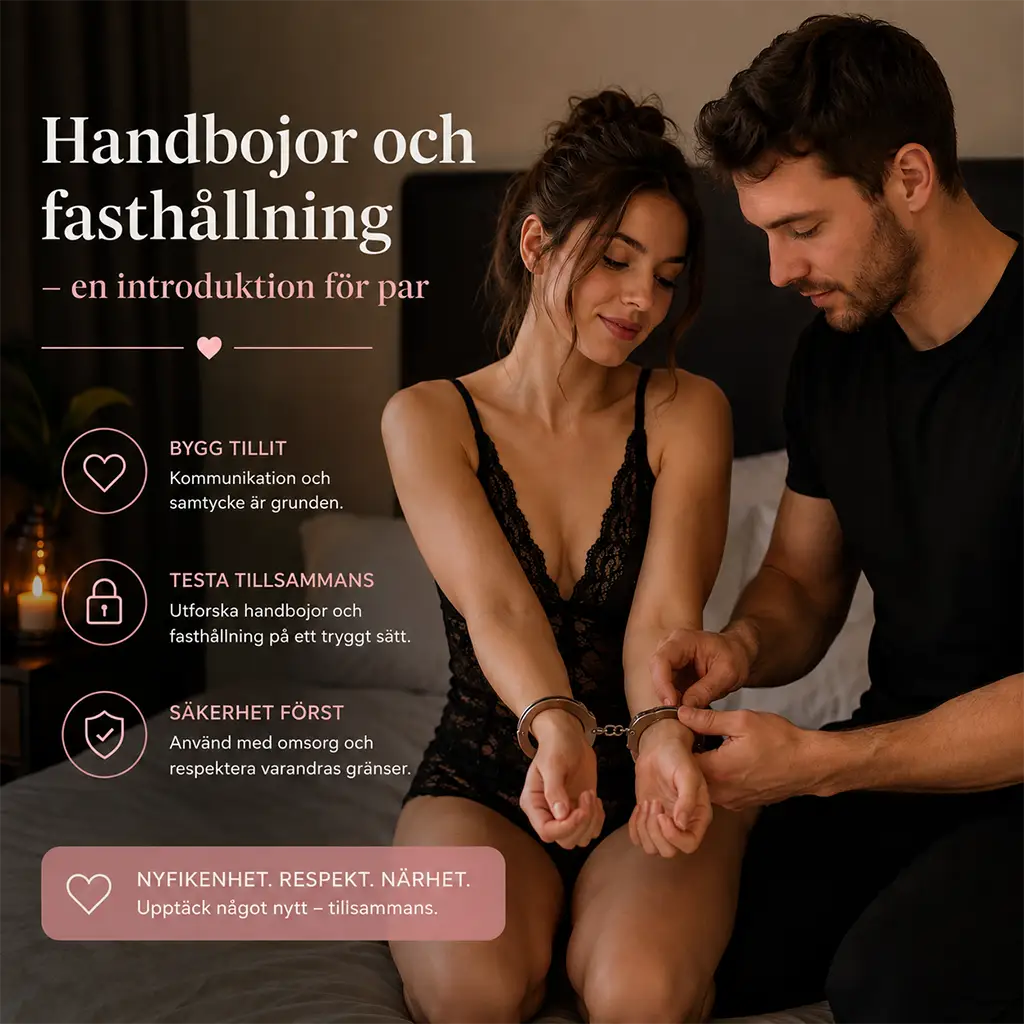

Bondage is one of the most commonly explored areas of erotic play and is fundamentally about playing with control, trust, and presence. It doesn't have to be complicated or intimidating – with the right preparation and open communication, it can be a deeply rewarding experience for everyone involved. This guide will help you get started in a responsible and enjoyable way.
What is bondage?
Bondage involves one person voluntarily allowing themselves to be tied or restrained by a partner, or vice versa. It is part of the broader spectrum of BDSM (Bondage, Discipline, Dominance, Submission, Sadism, and Masochism) and is always grounded in consent, mutual respect, and clear agreements.
The most important thing: Consent and communication
Before trying bondage, it is absolutely essential to have an open conversation with your partner. Discuss what you are both comfortable with, what you want to explore, and – equally importantly – what you do not want to do. Set clear boundaries in advance and establish a safeword – a word that immediately ends the play if anyone feels unsafe. A common and simple system is the traffic light: "green" means continue, "yellow" means slow down, and "red" means stop.
Choosing the right equipment as a beginner
As a beginner, it is wise to start simple and soft. Avoid natural-fiber ropes until you have learned safe knots, and instead choose products specifically designed for bondage play. Here are some great starting points:
- Soft handcuffs: Restraining handcuffs in soft materials are easy to use and easy to remove – perfect for beginners.
- Velour or silk restraints: These are gentle on the skin and give you good control without causing harm.
- Blindfold: A simple way to play with sensory input and anticipation without physically restraining the body.
- Feathers and massage tools: Complement the experience with light accessories for sensory stimulation.
It is also a good idea to keep a pair of blunt-tipped safety scissors nearby in case you need to quickly release a knot or restraint.
Safety during play
Safety is always the top priority. Regularly check that restraints are not too tight – you should always be able to slip a finger between the restraint and the skin. Avoid binding around the neck or joints in ways that could damage nerves or restrict blood flow. Maintain eye contact and communicate throughout the session, and make sure the restrained person is never left alone. Remember to close with a period of "aftercare" – warmth, comfort, and connection after the session – which helps both partners come down mentally and physically.
Setting the right mood
Part of the enjoyment of bondage is the atmosphere and sense of presence. Light some candles, play calm music, and wear something that makes you feel safe and confident. Don't forget a good water-based lubricant if the play involves more intimate moments – it increases comfort and pleasure for everyone involved.
Frequently asked questions
Is bondage safe for beginners?
Yes, bondage can be completely safe for beginners when you communicate openly, set clear boundaries, and use the right equipment. Always start simple and gradually increase as you build trust and knowledge together.
What is a safeword and why do you need one?
A safeword is a pre-agreed word that immediately stops the play if anyone feels unsafe or wants to stop. It is a cornerstone of all BDSM exploration and ensures that both partners always maintain control.
What equipment should I buy as a beginner?
As a beginner, soft handcuffs, velour restraints, or a simple blindfold are recommended. These are easy to use, gentle on the skin, and quick to remove if needed.
What is aftercare and why does it matter?
Aftercare is the period of comfort and connection that follows a bondage session – it might involve hugs, a warm blanket, water, or simply talking. It helps both partners process the experience and strengthens the sense of safety and trust in the relationship.